8 Oct 2026
Tournament Poker Survival Rates Linked to Early Round Bonus Utilization Patterns
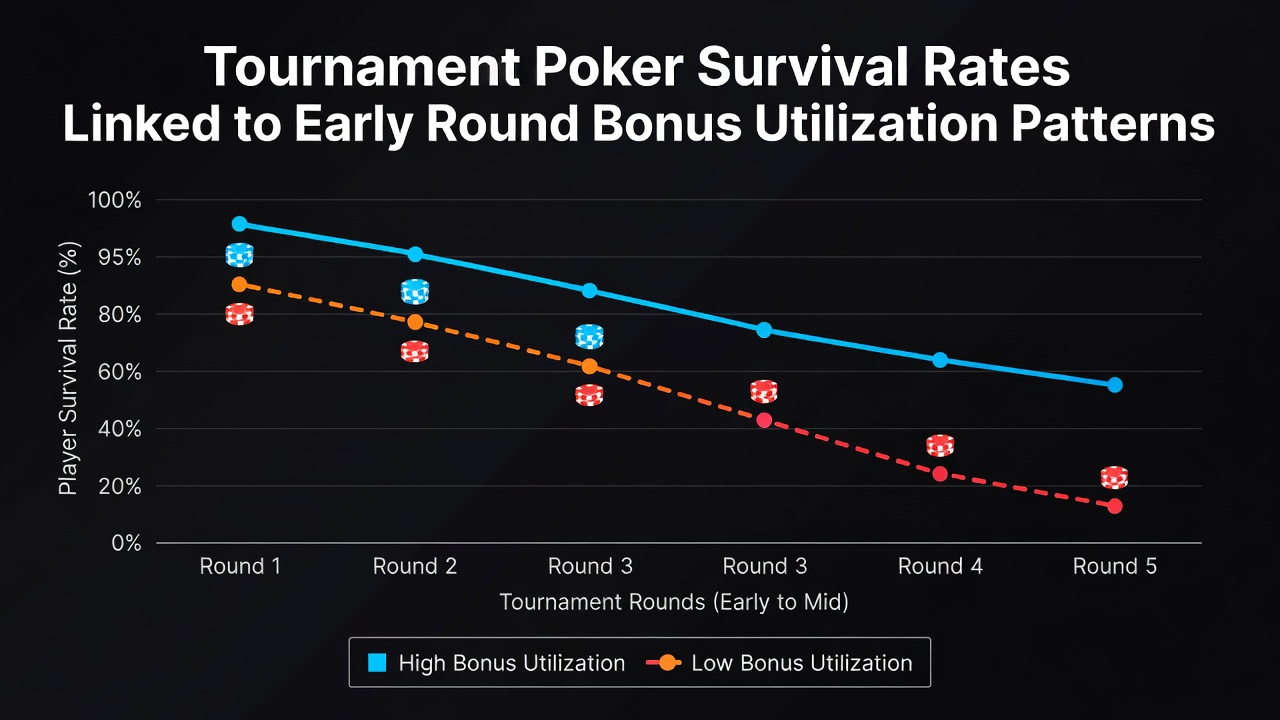
Analysts tracking multi-table poker tournaments have documented connections between early round bonus utilization and player survival rates through the initial stages of events, and figures from circuit-wide data collections reveal measurable differences in continuation percentages when bonuses activate within the first three levels. Observers note patterns where players who apply early registration or double-up style bonuses extend their average time in play by measurable margins compared to those who defer such options until later blinds increase.
Defining Early Round Bonuses and Their Mechanics
Early round bonuses typically include incentives such as additional starting chips for on-time registration, re-entry perks that reset stacks during the opening hours, or loyalty program credits that convert to tournament value before the first break. These mechanisms operate under specific time windows set by tournament organizers, and data from organized circuits show that activation rates peak during the initial 90 minutes of play when stack depths remain deepest relative to blinds.
Researchers examining field sizes above 500 entrants found that bonus utilization in the first levels correlates with survival rates climbing from baseline averages of 22 percent to levels near 31 percent by the end of level four, while players who skip these options in favor of standard entries post lower continuation numbers through the same period. And the distinction appears most pronounced in events offering multiple re-entry windows that close after the fourth level.
Survival Rate Patterns Across Tournament Structures
Studies compiled from North American circuits indicate that players who deploy early bonuses maintain higher average stack-to-blind ratios heading into the middle stages, and this positioning reduces elimination pressure during the first pay jump. Figures reveal that in freezeout formats without re-entries, survival through level six improves when bonuses are claimed before level two, whereas in re-entry heavy structures the advantage shifts toward timed utilization that preserves chips for potential second bullets.
What's interesting is how position interacts with these patterns, because data sets from events held in October 2026 across multiple venues show that early position players who activate bonuses early experience slightly different survival curves than late position counterparts who delay activation until after observing table dynamics. Those who've studied this know the effect compounds when combined with stack depth adjustments that account for antes entering play around level five.
Regional Data Variations and Utilization Trends
Reports from the Nevada Gaming Control Board track poker tournament metrics that align with broader patterns observed in other markets, and similar compilations from Australian regulatory bodies highlight comparable survival differentials tied to early bonus claims. In both regions, players who time bonus usage within the opening rounds demonstrate extended session lengths before reaching the money bubble, while deferred utilization links to higher variance in early exits.
One analysis of chained tournament series noted that bonus resets tied to weekly loyalty cycles influence game hopping sequences, yet survival rates stabilize when players concentrate bonus applications in single events rather than spreading them across multiple overlapping tournaments. And this holds particularly true for mid-stakes events where field sizes fluctuate based on promotional calendars.
Interface and Decision Timing Influences
Digital card room interfaces that display bonus availability timers affect when players commit to early round options, and customization features allowing players to set alerts before levels begin correlate with higher utilization consistency. Observers tracking extended sessions note that decision timing patterns shift when interfaces highlight remaining bonus windows, leading to more deliberate stack management during the first hour.
Evidence from networked platforms shows that reward reset cycles every seven days prompt increased early bonus claims at the start of each period, and these resets tie into improved survival metrics when players align them with major tournament starts. The reality is that deposit timing windows also factor into these sequences, because players who fund accounts ahead of bonus activation windows maintain steadier participation rates through the early rounds.
Conclusion
Patterns emerging from tournament data collections continue to link early round bonus utilization with measurable differences in survival rates across varied structures and regions, and ongoing tracking through late 2026 provides further datasets for refining these observations. Those monitoring circuit trends recognize that the timing of bonus activation remains a consistent variable in how players navigate initial levels and reach later stages.